mxto reads your entire Mendix™ app
Finally, an AI that sees the whole picture.
mxto reads, authors, compiles, deploys, and tests any Mendix™ app — headless, no Studio Pro.
~29 → 0 Other AIs guess ~29 times on a single microflow. mxto reads your entire app flawlessly on the first try.
Reads, Writes, Ships. No Modeler
Delivering Mendix™ work end-to-end takes three things an AI usually can't do. mxto does all three: headless, on Mac, Windows, Linux and CI.
Reads it
Understands any Mendix™ app the way an LLM needs to: in order, by name, not as a tangle of opaque references.
99.73% extraction coverage
Writes it
Authors every construct type (entities, microflows, pages, security) and proves it didn't break anything.
0 unexpected diffs across 4,967 round-trip ops · 6,122 live ops
Ships it
Compile → deploy → test → a running app, with Mendix's own build tools. No Studio Pro.
Live debugger with semantic breakpoints
What it changes for your delivery
Today a model change happens one app at a time with a specialist, by hand, in Studio Pro. With mxto your AI agent makes the change, builds, deploys and tests it, headless, in minutes.
Faster
Changes that take days of specialist work, shipped in minutes.
A running, tested app in ~20 sec
Leaner
Your AI does the manual build, so your scarce Mendix™ specialists spend their time on the work only they can do.
No Studio Pro, no Windows, runs in CI
Safer
Move fast without breaking the estate. Every change is proven not to drop anything.
Round-trip-proven on a production estate; read-certified across 8
We measured what it costs an AI to read one Mendix™ microflow
Reading one Mendix™ flow the old way means your AI decoding ~29 internal ID codes before the logic makes sense. mxto reads it straight through, by name; nothing to decode.
Measured on a real microflow with tiktoken o200k_base; resolution counts computed from the graph's own node/edge structure. The per-flow model graph is already a cleaned extraction: a conservative, baseline-favourable comparison. It compounds at estate scale: one production estate carries 4,162 flows.
Proof you can run yourself
A skeptical Mendix™ team can check every claim on this page in about ten minutes: download a real app an AI built end-to-end, rebuild it, re-run the round-trip that proves nothing dropped, and read exactly what is and is not covered.
- A real app you can download. The Claudius Mendix™ project, authored end-to-end by AI, as a
.mpryou open in Studio Pro yourself. - A round-trip you can reproduce. Extract, re-emit, diff: 0 unexpected diffs, nothing dropped or corrupted.
- Tested on Mendix™ 7.23 through 11.6. Eight production apps, with the boundaries stated honestly.
What mxto guarantees — and what it doesn't
mxto makes AI-authored changes to your Mendix™ app structurally safe: builds pass, round-trips are diff-checked, and no model constructs are silently dropped.
Humans still review business meaning before merge.
See the honest boundaries →Read, author, ship: one closed loop, proven
mxto does the whole job in one closed loop: read, author, build, deploy, and test to a running app. Most tools do only one piece of that.
| What end-to-end delivery needs | Other approaches | mxto |
|---|---|---|
| Read a Mendix™ model an LLM can use | Partial: lossy or token-heavy | ✓ 99.73% extraction coverage, 94.4% fewer tokens |
| Author every construct type | × suggestions a human re-enters | ✓ 70/70 certified, committed to Team Server |
| Run headless: no IDE, macOS/Linux/CI | × tied to Studio Pro on Windows | ✓ no Studio Pro at any step |
| Close the loop to a running, tested app | × stops at code or a diff | ✓ compile → deploy → UAT, verified |
| Prove the change didn't drop anything | Hope: no measured drift | ✓ 0 unexpected diffs across 4,967 round-trip ops |
No IDE. Every construct type. A closed loop to a running app. Comprehension built for the LLM. The structurally-safe way to deliver Mendix™ with AI.
Bring your own AI agent. mxto is how it reaches Mendix™
A Mendix™ model is a binary file your agent can't open. mxto is the toolchain it drives: 142+ tools, a clean CLI, and a comprehension layer built for an LLM. Bring Claude Code, Cursor, your own. mxto is how it reaches Mendix.
Proven, not promised
Every number below is measured across real production Mendix™ estates — not a demo, not a toy app.
Built by AI. Verified by proof
Claudius is a production Mendix™ 10 app authored entirely by Claude Code driving mxto — compiled, deployed and tested headless, no Studio Pro.
Claudius: IT Asset & Request Tracker
Built from YAML specs by Claude Code: approval workflows, audit trails, role-based access control, REST APIs, and SOAP integration. Claude Code authored every entity, microflow, page, and security rule through mxto, then compiled, deployed and tested it headless. Run it again from the same specs — you get the same app.
- Request approval workflow (submitted → review → approved/rejected → completed)
- Audit trail system with before/after commit event handlers
- Role-based access control (User, Manager, Admin)
- Published REST API with export mappings
- Consumed SOAP web services for external integration
- Scheduled events & nanoflows for client-side logic
- 3-phase test harness: 21 basic + 16 advanced + stress tests
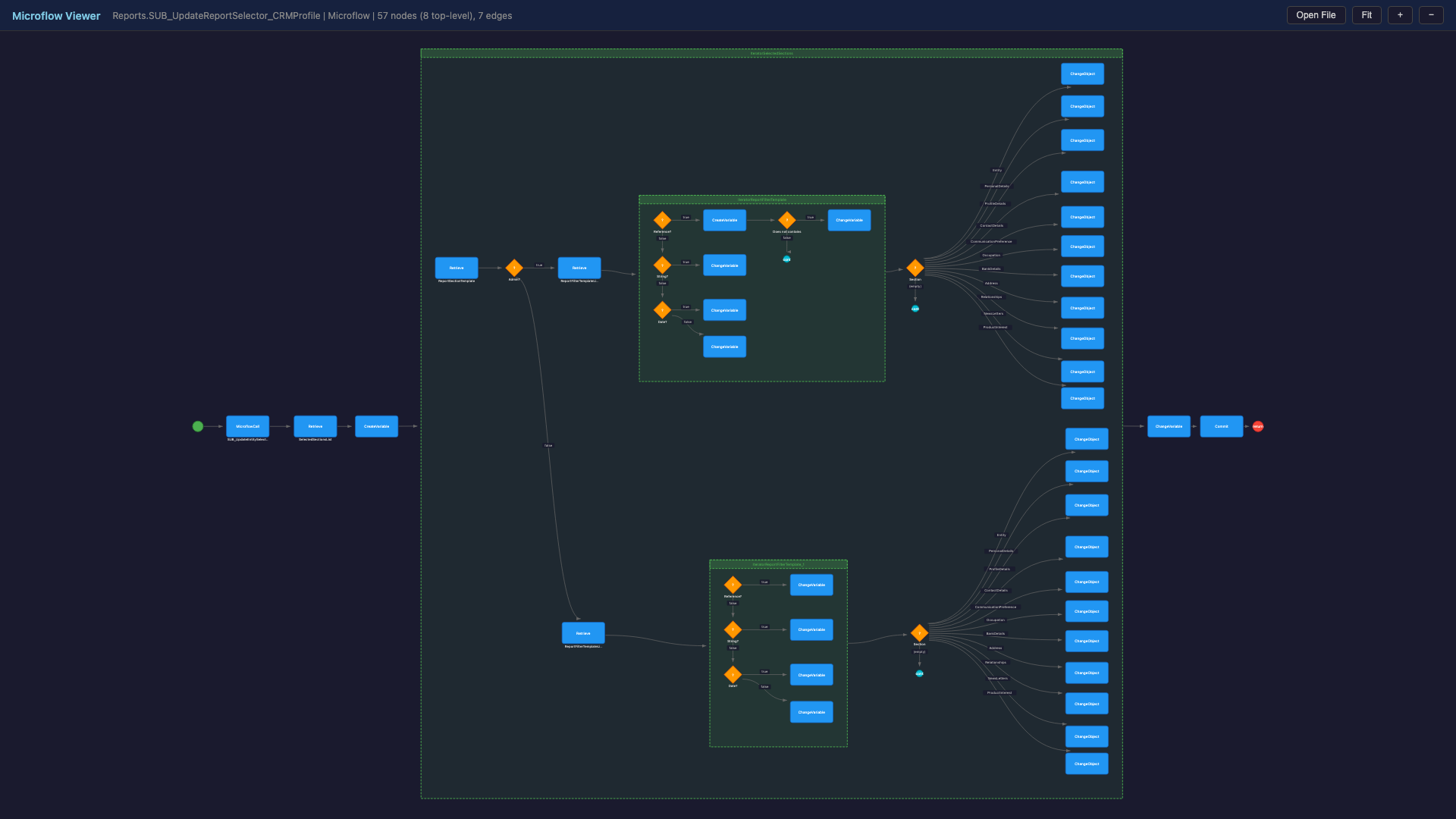
mxto reads and visualises every layer of Claudius: microflows, domain model and security rendered directly from the extracted app.
| Entity / Action | User | Manager | Admin |
|---|---|---|---|
| Asset: Read | Active only | All | All |
| Asset: Create/Edit/Delete | – | – | Full CRUD |
| Request: Read | Own only | All | All |
| Request: Create | Yes | Yes | Yes |
| Request: Approve/Reject | – | Yes | Yes |
| AuditEntry: Read | – | Yes | Yes |
| AuditEntry: Delete | – | – | Yes |
| Bulk Approve | – | Yes | Yes |
| Export CSV | – | Yes | Yes |
| Dashboard Metrics | Own stats | All stats | All stats |
Validated at production scale
mxto has been read-certified across 8 production Mendix™ estates spanning financial services, agritech, workforce, lending and hospitality, with zero transform failures.
Enterprise estate
48,385 logic expressions parsed at 100%
Write path, live
Claudius (AI-built)
Built entirely by Claude Code via mxto
Put an AI delivery engine
on your Mendix™ estate
Today a single microflow costs your AI ~29 guesses, and whole-app work stays manual. mxto changes that.
It reads any app, authors every construct, and ships it running, no Studio Pro.
We'll prove it on a sample of your own estate.
Prefer to evaluate first? Read the machine-readable AI evaluation, reproduce the benchmark, or email [email protected].
Syntax is easy. Semantics is everything
mxto's job is to make sure nothing breaks and nothing drops, and it does that completely. Whether the app means what you intended is a different question, and a harder one. That's the work we do at Ontology Labs.
Visit Ontology Labs →